
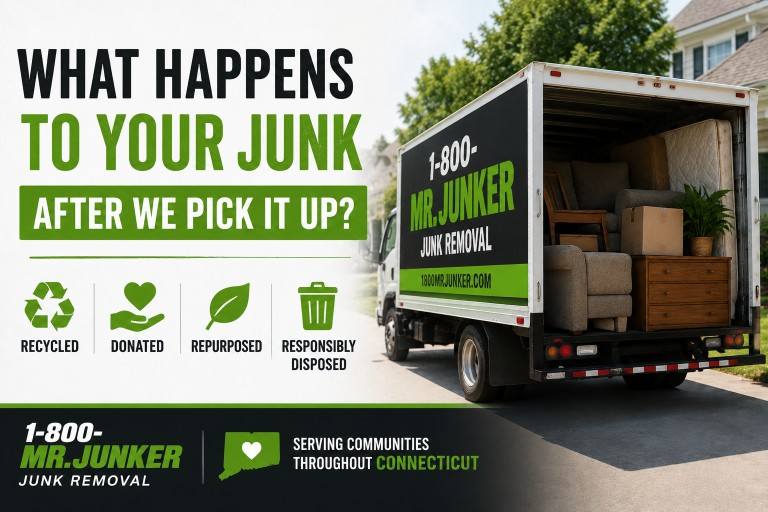
When you schedule junk removal, one question often comes to mind after the truck pulls away: What actually happens to all that junk?
Many Connecticut homeowners, business owners, landlords, property managers, and contractors assume everything goes straight to a landfill. In reality, professional junk removal involves much more than simply hauling items away. Depending on the materials involved, items may be recycled, donated, repurposed, or responsibly disposed of through approved facilities.
At 1-800-Mr. Junker, we help customers throughout Connecticut clear unwanted items from homes, apartments, offices, estates, construction sites, and commercial properties. Understanding what happens after pickup can help you make informed decisions and choose a junk removal company that prioritizes responsible disposal practices.
If you’re new to the junk removal process, our comprehensive Connecticut Junk Removal Guide explains everything from scheduling a pickup to understanding what happens after your items leave your property. Whether you’re clearing out a home, office, storage unit, or construction site, understanding the process can help you make informed decisions and choose the right junk removal company.
The Journey Begins After Pickup
Once your junk is loaded onto the truck, the sorting process begins.
Every junk removal project is unique. A residential cleanout in Hartford may contain furniture, electronics, and household goods, while a construction cleanup in New Haven may include lumber, drywall, metal, and demolition debris.
The first step is identifying materials that may be diverted from landfills whenever possible. Many items still have value, can be recycled, or may be suitable for donation depending on their condition.
This process helps reduce waste while supporting more sustainable junk removal practices throughout Connecticut.
Why Responsible Junk Removal Matters
Connecticut residents generate thousands of tons of waste each year.
When usable materials end up in landfills unnecessarily, valuable resources are lost. Professional junk removal companies play an important role in helping reduce landfill waste through recycling and responsible disposal efforts.
Responsible junk removal can help:
- Reduce environmental impact
- Conserve natural resources
- Extend landfill lifespan
- Support recycling programs
- Keep communities cleaner
- Prevent illegal dumping
For homeowners and businesses throughout Connecticut, choosing a reputable junk removal company helps ensure unwanted items are handled properly.
Common Items That Can Often Be Recycled
Many of the items collected during junk removal appointments contain materials that can be recycled.
Metal
Scrap metal is one of the most commonly recycled materials collected during junk removal projects.
Examples include:
- Filing cabinets
- Bed frames
- Metal shelving
- Grills
- Exercise equipment
- Metal furniture
- Pipes and fixtures
Metal recycling helps conserve raw materials and reduces the need for additional mining and manufacturing.
Appliances
Old appliances often contain valuable recyclable materials.
Examples include:
- Refrigerators
- Freezers
- Washers
- Dryers
- Stoves
- Dishwashers
- Microwaves
Many appliance components can be processed through approved recycling facilities.
Electronics
Electronic waste continues to grow throughout Connecticut and the United States.
Items commonly recycled include:
- Computers
- Monitors
- Printers
- TVs
- Laptops
- Networking equipment
- Office electronics
Proper electronics recycling helps prevent harmful materials from entering the environment.
Cardboard and Packaging Materials
Large cleanouts often generate significant amounts of cardboard.
Moving boxes, shipping cartons, and packaging materials can frequently be recycled rather than sent to landfills.
What Items May Be Donated?
Not everything picked up during junk removal is truly junk.
Many items still have useful life remaining and may be suitable for donation if they are clean, safe, and in good condition.
Common donation candidates include:
Furniture
Many furniture items can be reused, including:
- Sofas
- Chairs
- Tables
- Dressers
- Bookshelves
- Bed frames
Household Goods
Household items frequently donated include:
- Kitchenware
- Small appliances
- Home décor
- Lamps
- Storage containers
Clothing and Textiles
Clothing, shoes, and linens often have opportunities for reuse through local donation programs.
Donation efforts help reduce waste while benefiting individuals and organizations throughout Connecticut communities.
Construction Debris Requires Specialized Handling
Construction and renovation projects create unique waste streams.
Materials often collected include:
- Drywall
- Lumber
- Roofing materials
- Concrete
- Brick
- Tile
- Flooring
- Cabinetry
Many construction materials can be recycled or processed through specialized facilities.
Whether you’re renovating a home in Hartford, updating a rental property in New Haven, or managing a commercial project elsewhere in Connecticut, proper debris disposal helps maintain safe and compliant job sites.
Construction and renovation projects often create large amounts of debris that require specialized handling and disposal. Whether you’re remodeling a kitchen, replacing flooring, or completing a commercial renovation, professional junk removal can help keep your project moving forward. Homeowners and contractors looking for additional information can learn more about how junk removal works in Hartford, CT and the challenges associated with construction debris removal.
What About Estate Cleanouts?
Estate cleanouts often involve a wide variety of items accumulated over decades.
These projects may include:
- Furniture
- Appliances
- Clothing
- Household goods
- Antiques
- Electronics
- Books
- Yard equipment
Because every estate is unique, professional junk removal companies often sort materials to determine what can be donated, recycled, or responsibly disposed of.
Estate cleanouts are among the most complex projects handled throughout Connecticut because they often involve large volumes of mixed materials.
Why Some Items Must Be Disposed Of
While recycling and donation are important, not every item can be reused.
Items may require disposal when they are:
- Broken beyond repair
- Heavily damaged
- Contaminated
- Unsafe for reuse
- Non-recyclable
In these situations, materials are transported to approved disposal facilities that comply with local and state regulations.
Responsible disposal helps protect public health and the environment while ensuring compliance with Connecticut waste management requirements.
The Problem With Illegal Dumping
Unfortunately, illegal dumping continues to be an issue in many communities.
Discarding unwanted items in vacant lots, wooded areas, roadways, or unauthorized locations creates numerous problems, including:
- Environmental damage
- Safety hazards
- Increased cleanup costs
- Reduced property values
- Community blight
Professional junk removal helps eliminate these issues by ensuring materials are transported and processed through appropriate channels.
How Connecticut Homeowners Can Reduce Waste
Before scheduling junk removal, consider whether certain items can be reused or repurposed.
Simple steps include:
- Donating usable furniture
- Recycling electronics
- Selling valuable items
- Repurposing materials
- Consolidating recyclable goods
Even small efforts can help reduce the amount of waste entering landfills.
Choosing a Connecticut Junk Removal Company
When hiring a junk removal company, it is worth asking questions about disposal practices.
A reputable company should be able to explain:
- How materials are sorted
- What items can be recycled
- What items may be donated
- How disposal is handled
- Whether local regulations are followed
Understanding these processes helps ensure your unwanted items are managed responsibly.
What Happens After We Pick Up Your Junk?
The answer depends on what is being removed.
Some materials may be recycled. Others may be donated. Certain items require proper disposal through approved facilities.
The goal is always to manage materials responsibly while helping customers reclaim valuable space in their homes, offices, rental properties, and businesses.
Whether you need furniture removal, appliance removal, estate cleanouts, construction debris removal, or full-property cleanouts, professional junk removal provides a convenient and responsible solution.
If you’re looking for junk removal services anywhere in Connecticut, 1-800-Mr. Junker is ready to help.
Frequently Asked Questions
Do junk removal companies recycle?
Many professional junk removal companies recycle eligible materials whenever possible, including metal, appliances, electronics, cardboard, and certain construction materials.
Do junk removal companies donate usable items?
Items in good condition may sometimes be suitable for donation, depending on local donation programs and item quality.
What happens to old furniture after junk removal?
Furniture may be donated, recycled, repurposed, or disposed of depending on its condition.
Are appliances recycled?
Many appliances contain recyclable materials and components that can often be processed through approved recycling facilities.
What happens to construction debris?
Construction debris is typically transported to approved facilities where recyclable materials are separated from non-recyclable waste.
Does all junk go to a landfill?
No. Professional junk removal often involves recycling, donation, and material recovery efforts before disposal becomes necessary.